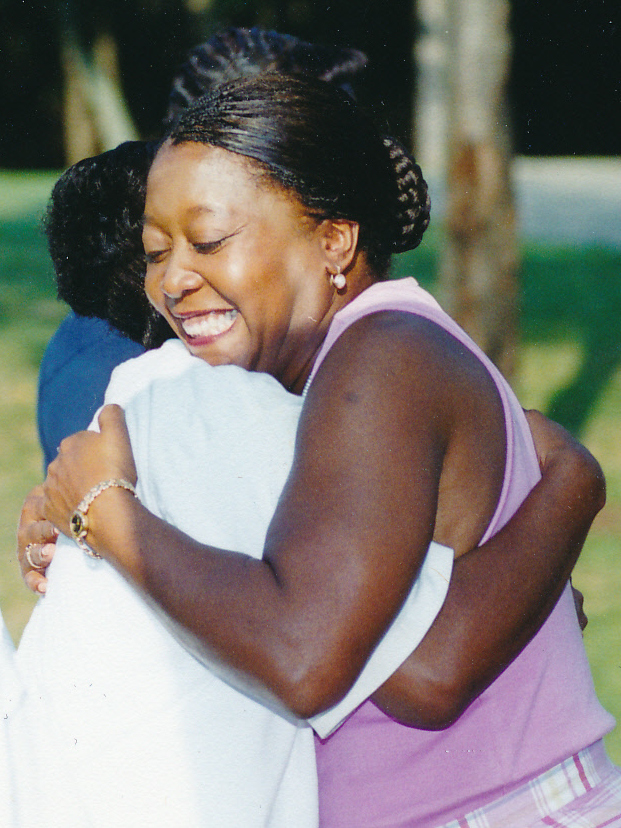
What Arlinda Taught Me About Caregiving
Throughout our journey together, Arlinda taught me many things. She taught me to be more socially aware, to pay attention to my surroundings. The lessons in caregiving stand out the most.
There are the technical aspects of handling a care recipient. When I helped her off of the couch, or out of my Wrangler, I would use my strength to pull her through the motion. From her perspective, she felt yanked into position. She suggested holding my hand from and still so that she could leverage herself up.
There is attention to detail. On our excursion to doctor’s appointments, making sure we had all of the medication, feeding supplies, documents, IDs, reading material, and tucking her into the passenger seat with a friend's homemade quilt.
What Arlinda showed me has increased my level of awareness of this fantastical medical world where magicians wear lab coats. The following list shows the philosophical takeaways about caregiving:
The Weight of Decision-Making
There were times at a doctor's appointment that the news was too much for Arlinda to handle. When she mentally checked out, I was the one calling the shots, representing her needs to the doctor or nurse. In these moments, I was making decisions on her behalf, factoring how I expected she would answer. Without an Advanced Directive or Power of Attorney for Healthcare, we did not have a structured dialogue where I could collect those wishes. The worst time to fill out and discuss either of these topics is when the recipient is in a health crisis.
Presence Over Problem-Solving
Arlinda explicitly told me one time, “Just listen. Everyone else jumps in to offer experiences they’ve had that they think are similar. You don’t do that. That’s what I like about you.” I learned that sometimes the best care was sitting with her, on the phone, in her home, at the hospital. The solution did not always involve what to do to ameliorate her condition. Sometimes the answer was enjoying each other's company.
Physical Comfort and Touch
Through massage and progressive muscle relaxation, I eased Arlinda’s pain. These were techniques my parents taught me in the mid-1980s to control my childhood migraines. The lessons I learned in pain management became a circle of care, helping Arlinda bring the pain down to a more tolerable level. And the intimate, yet platonic act of care conveyed more of my feelings to Arlinda than if I told her in the moment, “I love you.”
Advocacy in Healthcare Systems
I was shocked to discover medical racism was alive and will in the liberal bubble of the San Francisco Bay Area. I had documented the slow path to diagnosis, the long wait times at the pharmacy, the catatonic response of doctors regarding our pleas for better pain management. Only years later, when I took a course on White Privilege did I realize that medical racism existed. And then a call to Cindy confirmed it with me that racism does not constrain itself to cartographic boundaries.
Even with the manuscript done (until my next revision), I am still untangling the lessons of healthcare with Arlinda. It seems our path to future health is a treadmill threatening to return us to ancient practices. All we can ever be for each other is be present.