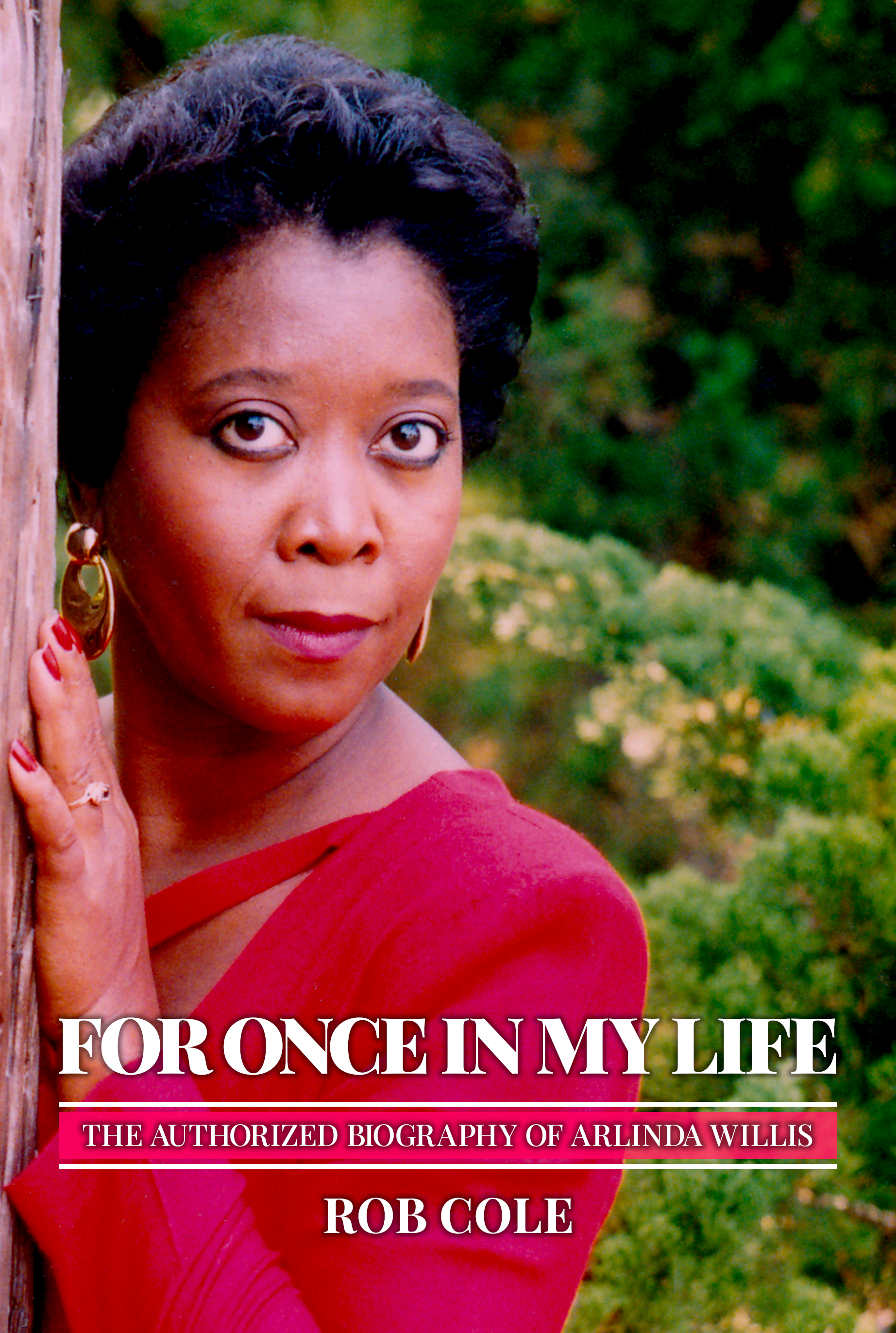
For Once in My Life
 In this authorized biography set in twentieth-century Black America, Arlinda Willis, a sharecropper’s granddaughter from Jim Crow Alabama, fights to earn a love she does not yet know she already has, while a healthcare system she trusts dismisses her.
Born in 1951, in Toxey, Alabama, Arlinda grows up in the shadow of Jim Crow racism, raised by grandparents on a small farm while her mother builds a new life in Cleveland, Ohio. When she finally travels north to reunite with her family, she believes love must be earned.
She earns love as a teenager, dancing on Upbeat, Cleveland’s nationally syndicated music television show, performing alongside Stevie Wonder and James Brown, integrating the American airwaves while the Civil Rights Movement is reshaping the country on the streets below. She competes in the first Miss Black Cleveland pageant. She builds a distinguished career at one of San Francisco’s most prestigious law firms. Each achievement quiets the voice that tells her she is not enough.
At the law firm in 1994, she meets Rob Cole, a white British immigrant, who spends the next eighteen years as her closest friend, caregiver, and biographer. Their honest, funny, and sometimes difficult friendship crosses generational and racial lines.
When esophageal cancer strips away her independence and her carefully constructed image of strength, Arlinda encounters a healthcare system that dismisses her pain, minimizes her symptoms, and tells her one story while recording another in her medical notes. The gap between what her doctors say and what they write is a pattern. That pattern has a name.
For Once in My Life is the authorized biography thirty years in the making, a portrait of what can be gained and what is lost to care for someone you love. It follows Arlinda Willis from the sharecropping communities of the Alabama Black Belt through the Great Migration, the stages of Cleveland’s Black entertainment scene, the corridors of San Francisco’s legal world, and into a final chapter defined by medical racism, unconditional love, and the hardest lesson of her extraordinary life: That she is enough as she is.
Published on August 27, 2026, on what would have been Arlinda’s 75th birthday, and the 63rd anniversary of Dr. Martin Luther King Jr.’s “I Have a Dream” speech.
Some content in this book, which includes brief scenes of violence, allusion to child sexual assault, suicide ideation, and sexuality insensitivity, may activate the reader.
“A touching biography and impassioned reminder of the persistent legacy of systemic racism.” —Kirkus Reviews
“Insightful... embedding the narration in a larger cultural story.” —Foreword Clarion Reviews
“Careful prose and thoughtful reflection on the value of human relationship.” —BlueInk Review
For readers of Isabel Wilkerson’s The Warmth of Other Suns, Keisha N. Blain’s Until I Am Free, and Paul Kalanithi’s When Breath Becomes Air.
Content Warnings
Some content in this book, which includes brief scenes of violence, allusion to child sexual assault, suicide ideation, and sexuality insensitivity, may activate you. I have included them to represent the scenes as faithfully as possible, not as an endorsement of such actions. Continue at your own discretion.
Music Copyright
Copyright limitations made it prohibitively expensive to include the lyrics of private-domain songs as chapter epigraphs. The music itself remains central to this story. Each chapter title references a song that illuminates the emotional terrain of that section. I encourage you to listen to the recordings of all songs mentioned as companion pieces to the narrative. I believe they will deepen your understanding of the moments captured in this story.
The Why
When people ask why I am telling Arlinda’s story, the simple answer is: she asked me to.
I am painfully aware of my role in this telling. I am a White, cisgender male, heterosexual immigrant attempting to honor the life of a Black American woman who navigated racism, classism, ageism, and sexism. I have never been the target of the prejudices that shrouded her entire life. As someone who has benefited from the very systems that disadvantaged her, I am using my privilege to broadcast these injustices. That is what privilege is for.
What follows is a narrative-framed mosaic of the story Arlinda told me in interviews and the experiences we shared, with added context from her friends and family, and what I have spent the years since trying to understand.
From Overt to Covert Racism
I did not set out to write a book about racism. I set out to create a biography of a kindred spirit.
It was only after documenting Arlinda’s medical experiences that I discovered I had unwittingly recorded a pattern of racial bias in her medical care. The markers jumped off of the page, like staring at a magic eye long enough to see the obfuscated image. The symptoms of inequality emerged from occurrences of under-treated pain, delayed diagnosis, the myth of higher pain tolerance, and the disregard of a Black woman’s reported symptoms.
I am not qualified to diagnose medical racism, nor do I believe the professionals who cared for Arlinda acted from anything other than their best judgment within the constraints placed on their practice. Insurance gaps narrowed her doctors’ options. The financial distance between the Highland Medical Center pharmacy and a chain drugstore was unreachable for Arlinda and many of her fellow patients. Her pain medication had maxed out, and she had refused morphine until she could refuse it no more. Each incident could be explained away as an unfortunate event.
Her collective experiences, combined with others who have the intersectionality of being Black and female in the United States suggest bias is seated in the system itself. The doctors did not build a structure designed to disadvantage her. Neither did Arlinda. But only one of them had to live inside it without recourse.
When I asked Arlinda’s longtime friend about the possibility of medical racism in the liberal bubble of the San Francisco Bay Area, Cindy shot back without hesitation:
“Yes! Yes!”
Arlinda’s reality materialized before me: Every action, every interaction was informed by race, class, age, gender, etc. Just like mine had been. Despite our differences, we had found opportunities to connect with each other, and our lives had been all the richer for it.
In writing Arlinda’s book, I had wanted to insert the doctors’ notes into the chronicling of her medical experience. I expected their perspective on Arlinda’s condition could help give insight into the treatment process for a cancer case like hers. When I reviewed Arlinda’s medical records from Eden Medical Center and Highland Medical Center I noticed inconsistencies between what the doctors told us and what they put in their notes. The doctors’ notes admitted that in March 2012, they surmised she had only a couple of months to live, yet they still prescribed 12 monthly treatments of pamidronate. I became so exasperated by the differences that I stopped writing the book. Years passed with me returning to the book in fits and starts, only to have the same incensed emotions halt its continuation. Eventually, I came to the conclusion that the book was about Arlinda’s life and how she lived it, rather than contesting her experiences with doctors’ prognoses.
Generations of Injustice
The 14th Amendment did not eradicate systemic discrimination; rather, inequitable structures persisted through new forms. Similarly, the Civil Rights Act addressed overt legal barriers, but underlying institutional inequalities persisted. Racism shifted from unconcealed prejudice to a more subtle “color-blind” expression. Even the election of Barack Obama, often regarded as a watershed moment for equality in the United States, left persistent systems of racial disadvantage intact. These milestones released the tension of obligation for White people to believe they had done enough for racism. Yet time indicates, and the voices of the oppressed confirm, there is still more work to be done.
Racism is not over. This book is not its final chapter.
My Limitations
I acknowledge that I will never fully comprehend Arlinda’s experiences, nor can anyone, Black, female, or otherwise. Writing her story has transformed my perspective. It has pushed me to address issues of race and inequality without appropriating the message.
I share Arlinda’s personal account with humility and respect, while understanding my own limitations in this work. At the request for anonymity of her half-siblings, I have omitted them from her story.
This narrative contains personal stories, not a scientific attestation on prejudice. If the content stirs feelings of discomfort, lean into it as an area for growth. You may identify patterns that are meaningful to you, while discarding others. That is your privilege and responsibility.
With this biography I hope to contribute, however imperfectly, to the collective push for a more fair-minded society.
—Rob Cole
The Great Migration
Between 1910 and 1970, approximately six million Black Americans left the Jim Crow South for the cities of the North and West. It was one of the largest internal migrations in American history. Arlinda Willis's mother was part of its second wave, as she journeyed from Toxey, Alabama to Cleveland, Ohio. Arlinda followed at age 11.
The Cleveland Arlinda arrived in was already being shaped by thousands of Black Southerners who had preceded her. The biography places Arlinda's individual journey within that collective one. It depicts what the Migration gave its participants and what it cost them, and whether the North delivered on the promise that drew them there.
Jim Crow Alabama and the Black Belt
Arlinda Willis was born in Choctaw County, Alabama, deep in the Black Belt, named for the richness of its soil, marked by poverty. She grew up in a three-bedroom house built shortly after the Civil War, with neither indoor plumbing nor electricity, and within a legal and social order designed to ensure that Black people remained voiceless and economically dependent.
The Alabama sections of For Once in My Life texture that world with specificity and care for the grandparents who raised her, the farm that sustained them, the church that anchored the community, and the Civil Rights Movement that intended to gain respect. Claudette Colvin refused to give up her seat on a Montgomery bus when Arlinda was three years old. The march from Selma to Montgomery happened closer than 100 miles from where she grew up.
The Civil Rights Era as Lived Experience
What has been historically left out of the Civil Rights historiography is ordinary Black lives being lived through that era, like when to comply with injustices and when to confront them, and the daily acts of dignity performed by people who were never photographed and never quoted.
Arlinda Willis was one of those people. She danced on national television in the same year as Bloody Sunday, integrating the American airwaves in a way that historians have almost entirely overlooked. For Once in My Life argues that the Civil Rights Movement had two simultaneous histories: the confrontational history of bridges and billy clubs, and the cultural history of Black Americans claiming space, presence, and visibility in American life through art, performance, and professional achievement. Arlinda's story focuses on the second history, which she could experience because of the first.
Medical Racism and Healthcare Inequality
In the final chapter of Arlinda's life, the American healthcare system failed her in ways that were neither accidental nor isolated. Her pain was undertreated. Her symptoms were minimized. The prognosis her doctors communicated to her face was measurably more optimistic than the prognosis they recorded in their clinical notes. Each individual incident could be explained as an unfortunate circumstance. Taken together, across appointments, emergency room visits, and pharmacy waiting rooms, they revealed a pattern of prejudice.
The author set out to write a biography of his friend. It was only after documenting Arlinda's medical experiences in full that the pattern emerged. The documented reality of Black women's healthcare experiences in America was present in Arlinda's story all along. Undertreated pain, delayed diagnosis, the persistent myth of higher pain tolerance, the institutional disregard of Black women's reported symptoms. For Once in My Life does not diagnose medical racism, or spoonfeed the reader the instances of prejudice. The author decided to render one Black woman's experience with enough specificity and honesty that the reader can see it for themselves.
Interracial Friendship
Rob Cole met Arlinda Willis at a San Francisco law firm in 1994. He was a white British immigrant in his twenties. She was a Black American woman in her forties. Their Friday lunch outings deepened their relationship over the following years. They sat with each other through illness and loss and the ordinary difficulties of two very different people who had decided, against the grain of everything their respective cultures had prepared them for, to know each other fully. For Once in My Life presents their relationship as a necessary connection across difference.
Caregiving and Bearing Witness
To care for someone through a long illness is to be changed by it in ways that are difficult to name and impossible to undo. It is to learn what a person is made of when performance is no longer possible. It is to carry that knowledge forward when the person is gone, and to decide what to do with it.
Rob Cole spent months accompanying Arlinda Willis through chemotherapy, through emergency rooms, through pharmacy waiting rooms where they waited longer than they should have, through the quiet final chapter of her life. For Once in My Life is, among other things, a caregiver's account of what it means to be fully present for another person's dying. It is written for everyone who has sat in a hospital waiting room and felt the particular helplessness of loving someone they could not protect, and for everyone who has wondered whether bearing witness is enough. It is.
Authorized Biography as an Act of Justice
Arlinda Willis asked Rob Cole to write her biography. She wanted someone else's eyes on her life, someone who had been in the room and could be trusted to tell the truth about what they saw. She handed him a copy of The Immortal Life of Henrietta Lacks understanding the emotional impact it would require of Rob.
Authorized biography is an act of trust between subject and biographer. A Black American woman lives through Jim Crow Alabama, the Great Migration, the Civil Rights era, and the documented failures of the American healthcare system. The extraordinary lives of Black women have been systematically underrecorded in American biography. The shelves that should hold their stories are too often bare. For Once in My Life is one biographer's attempt to address that absence.
Love, Performance, and the Self
Running beneath every other theme in For Once in My Life is a question that Arlinda Willis spent her entire life trying to answer: Is love something you earn, or something you receive? From her earliest years in Alabama, shaped by the circumstances of her mother's departure and the grandparents who raised her in her absence, Arlinda absorbed a conviction that love was conditional. It had to be justified through achievement, through performance, through the relentless demonstration of worth.
She spent decades proving that conviction. In striving to be the best in dancing, the pageant, her career, her professional life was also, underneath, an argument for her own lovability. It was only when illness stripped away the capacity to perform that she encountered, perhaps for the first time, love that asked nothing of her in return. The central tragic irony of her life is also its redemption: she spent sixty years earning what was already hers. For Once in My Life is the account of how she finally came to know it.
Author's Note
1. We’ll Understand It Better By and By
2. I Shall Not Be Moved
3. Take Off Your Cool
4. Lift Every Voice and Sing
5. Find Out Who Your Friends Are
6. Nobody Knows the Trouble I've Seen
7. Best Friend
8. Bye Bye Blackbird
9. Make Me Better
10. Follow the Drinking Gourd
11. Stop This Train
12. Lean on Me
13. Just Stand Up
14. Little Girls Grow Up
15. I Will Survive
16. In My Room
17. I Just Want To Celebrate
18. Swinging on a Star
19. When You Believe
20. People Get Ready
21. Both Sides Now
22. Summer in the City
23. Box of Rain
24. Only the Strong Survive
25. The Lighthouse
26. Knowing Me, Knowing You
27. You're All I Need To Get By
28. Career Opportunities
29. I Say a Little Prayer
30. I’ll Stand By You
31. Respect
32. Words of Wisdom
33. Count on Me
34. Nothing’s Gonna Stop Us Now
35. Just the Way You Are
36. Jump
37. Where Is the Love
38. Jet Airliner
39. Precious Pain
40. Gonna Get Up
41. I'm Depending on You
42. Big Yellow Taxi
Coda
43. That’s What Friends Are For
44. Miles to Nowhere
45. Miss You
References
Acknowledgement
About the Author
Spread the Word
Fact Sheet
For Once in My Life: The Authorized Biography of Arlinda Willis
Rob Cole
Margot Erickson Publishing, Inc.
August 27, 2026
Hardcover, Trade Paperback, Large Print/Accessible, eBook
Hardcover 979-8-9957094-1-1
Paperback 979-8-9957094-2-8
Large Print/Accessible 979-8-9957094-3-5
eBook 979-8-9957094-4-2
Hardcover $28.99
Paperback $18.99
Large Print/Accessible $34.99
eBook $8.99
Amazon, IngramSpark, bookshop.com
BIO001000, HIS036060, SOC028000, BIO022000