Self-Care in Crisis Mode
In January, 2022, when the Social Security Administration declared me disabled, I had to get new insurance. After working through the administrative machinations of switching my policy, through phone calls, filling out forms, and enduring atrocious hold music, I sat back and let out a huge sigh.
My girlfriend, Nikki, looked at me. “What are you feeling right now?”
I thought for a minute, scanning my body the way Arlinda would have done. “Tired. Can’t think right. Difficulty speaking.”
“You’re dysregulated,” she announced.
At the time, Nikki was a mental health coach. This was many months before she took her first therapy class, but she already displayed an innate, keen insight.
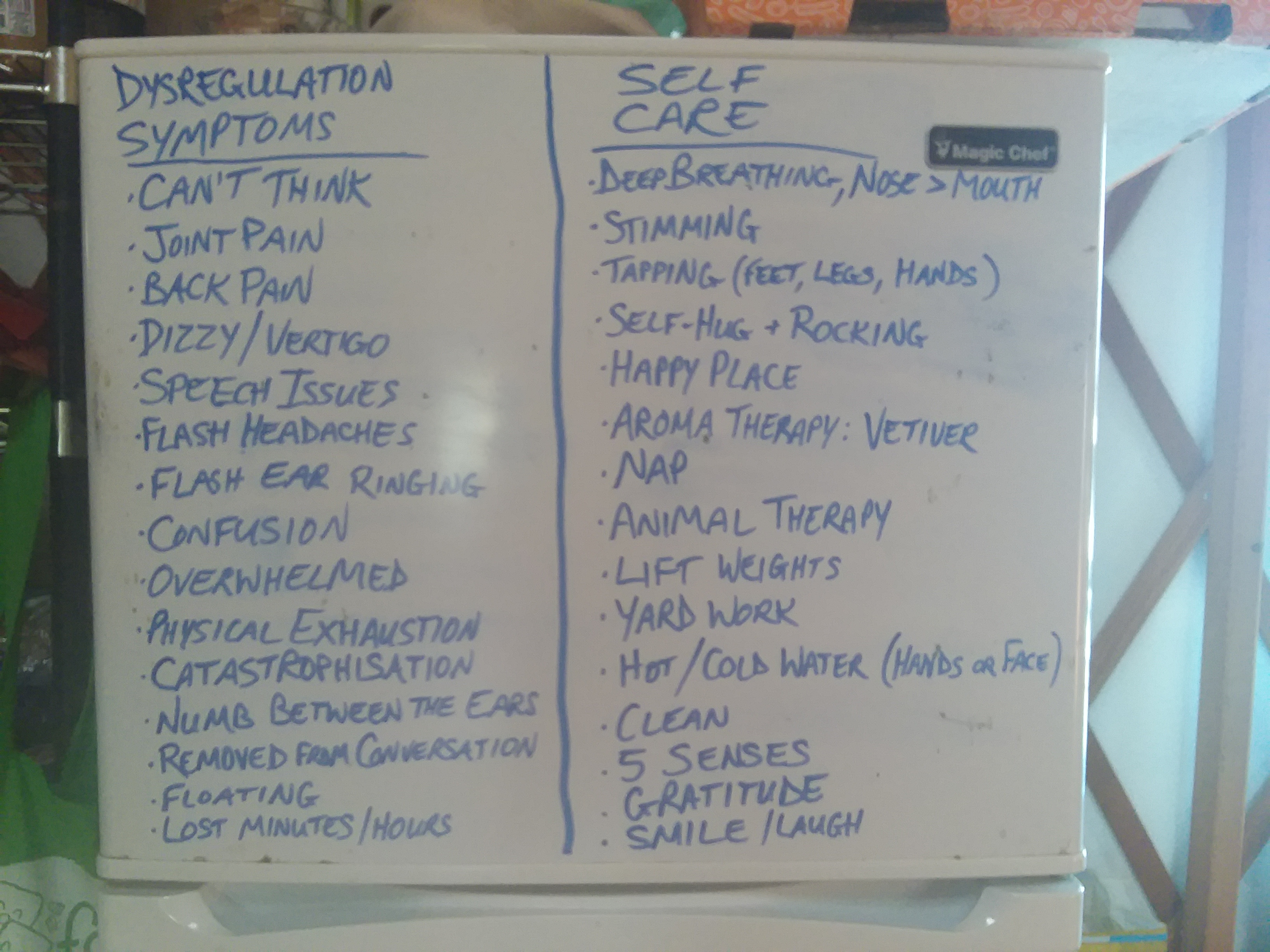
She sat down beside me and led me in a five minute meditation. After the reset, we looked for a whiteboard to write down my symptoms. Living at the sanctuary, there was usually a whiteboard or two available for community classes. But this time, none materialized.
I decided to write the list with a dry erase marker directly on the freezer door. That way anyone visiting me could assess me and help ground me.
I had not realized that the brain fog and shortness of breath were signals of dysregulation. They had always just felt like who I was after any stressful task. When I finished the list, Nikki and I brainstormed self-care activities that could help ground me: breathing exercises, soothing autistic release movements, shocking my senses, etc.
I showered Nikki with praise for doing what three years of therapy had failed to accomplish: linking my physical manifestations with my mental state. In modesty, she deflected the accolades, saying she had merely watched a YouTube video on this exercise the week prior.
Regardless, she was there at the right place and the right time to provide insight into my trauma response.
And now, whenever I feel that familiar cascade of symptoms, or more importantly, when someone visiting sees me exhibit these symptoms, I can now name, track, and address it.