Getting Unstuck in Storytelling
With a better understanding of Hawaiian culture, I now ask the ti plant for permission before taking from it. A few leaves from this one, a few from the next, not too many. Harvesting too greedily from one plant will snap the growing tip, leaving me drowning in guilt. This ritual of asking and selecting leaves with care fosters a sense of responsibility and respect for the natural world, reminding me of my connection to the plants and my role as a mindful White caretaker living on Hawaiian land. I gather a dozen leaves before retreating to the lanai.
In the first draft of telling Arlinda’s story, I strung together all of the anecdotes we remembered together. It felt more like a holiday photo album, capturing great memories, one that would bore company if we shared it with them. To transform these anecdotes into a narrative with depth, I asked myself, “What themes naturally emerge from these individual stories, and how do they connect to Arlinda’s growth?” I identified key elements, such as her adaptation to urban life, which became the foundation for her career in entertainment. I considered how each story aligned with the chapter’s theme and how it contributed to a cohesive narrative.
Through the editing process, the sentences and paragraphs coalesced into workable scenes. Grouped together, I could see a throughline in Arlinda’s teenage years.
I cut the stem tip of the ti leaf with my teeth, taste the sweet green, and ease the spine away from the rest of the leaf. The stem goes in a pile for the goats. The two halves of the leaf are placed in their own stack. Softly, I hum the tune of Lei ʻIlima as I triage the plant. The slack key guitar accompaniment in my mind steadies my pulse, focuses my fingers. The plant requires calm.
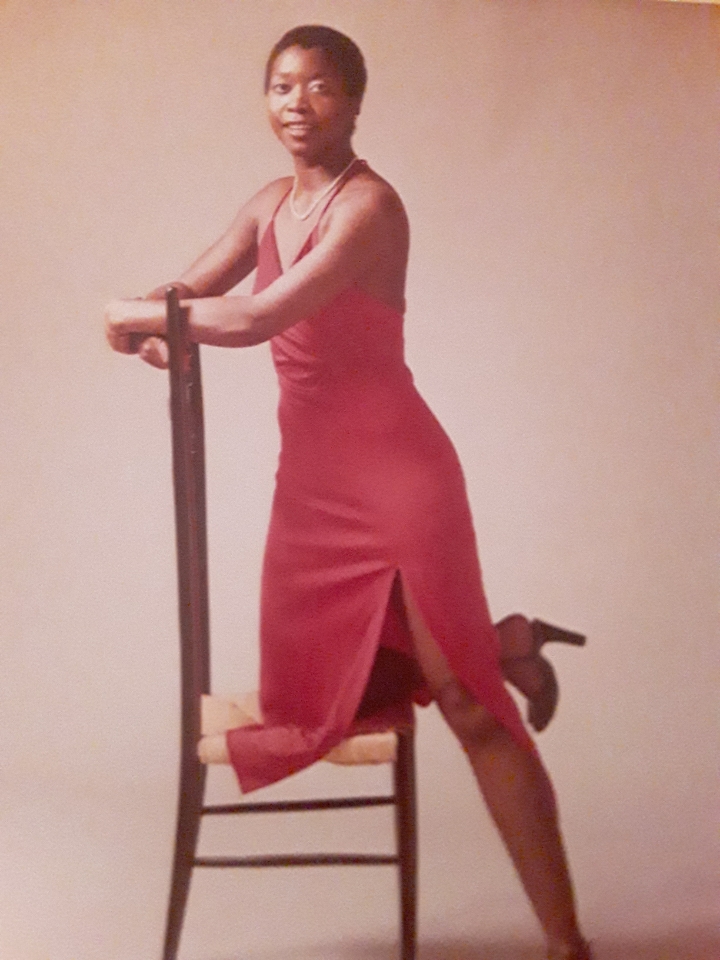
Arlinda had mentioned posing as a teenager in front of her bedroom mirror. She would watch herself as she moved about her room in costumes, imagining herself mid-spin as Diana Ross or mid-leap as Katherine Dunham.
I framed the chapter around Arlinda’s reflection, literally modeling in front of the mirror, figuratively reflecting on 1960s teenage life in Cleveland, Ohio. This interplay juxtaposed Arlinda’s desire to become an entertainer with the inputs city life offered. To implement the braiding technique, I selected narratives that highlighted pivotal moments in Arlinda’s journey and wove them together to reflect themes of aspiration and adaptation. By intertwining stories within a framework story, the chapter serves as an identifiable goal Arlinda is working toward.
Now I wind the leaves around themselves, hulihuli, much like intertwining the different stories in Arlinda’s life. One strand crosses another, then another, circling in a helix that seems simple. Just as the rope turns on itself, with each leaf lending strength to the whole and creating a length greater than any leaf could achieve alone, the narrative threads combine to form a more resilient and unified story.
As you reflect on your own writing, consider how you might braid various elements of your narrative together. Which themes or stories in your work could interweave to form a stronger, more cohesive piece? Embrace this metaphorical weaving to enrich your writing practice, discover new connections, and deepen your storytelling.
I tie the ends together. The ti leaf lei holds.